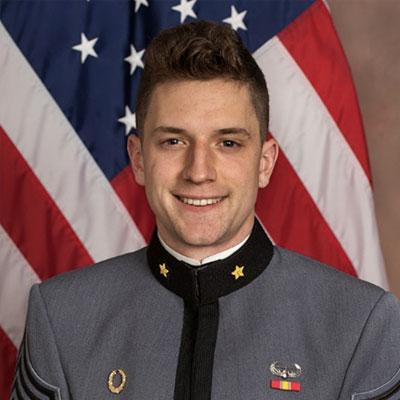

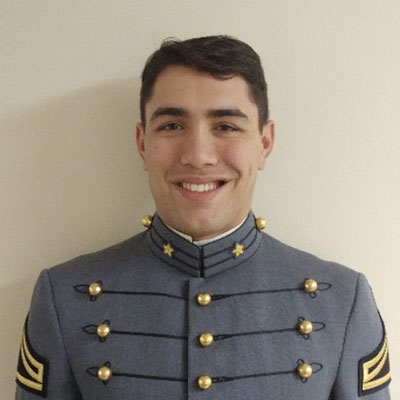
1 LT Gabriel Beck USMA ’16
Current Position: US Army Student at Universität Siegen (Roads to Democracies Programme)
Honors: Deutscher Akademischer Austauschdienst (German Academic Exchange) Graduate Scholarship
CHGS Programming: Courses – XH 415 “Genocide and Mass Killing,”HI 498-99 Senior Honors Thesis on Memorialization of the Holocaust at former concentration camps in Germany. Programs – Participant in 2016 JSAMAPS, 2014 American Service Academies Program for Holocaust Studies in Poland
In an interview conducted last year, 1LT Beck said the following about the importance of military officers having the opportunity to do Holocaust and genocide studies. “When you first enter the military and you are told about how following orders works, there’s very little discussion of ‘only if you think it is the right thing to do’. Of course you can’t always ponder and contemplate every single order you’re given over a glass of brandy…to see if it aligns with your own moral code. It is something that you’ve got to develop an instinct for, and know when to do it and how to do it. And these things don’t develop in a person overnight. They’re skills that only come with a lot of contemplation beforehand, so that if I’m thrust into a combat operation, all the thinking will have been done earlier. Then, the decision can be made when it actually matters.” This, he noted, was the importance of studying genocide for officers. For this and other interviews excerpts, please click here.
Gabriel is currently researching the redevelopment of German political parties after World War II in the isolated yet industrially significant Siegerland. Near the border of the American zone, the city of Siegen and its surrounding, mountainous countryside lay within the former? British Occupation Zone. Initially, the British imposed local government had overrepresentation from both the Communists and the Social Democrats, but through the local elections of 1946 and 1948 as well as the first federal election in 1949, the area returned to its conservative pre-war roots, albeit shorn of direct antisemitism, with a very strong showing by the newly formed Christian Democratic Union. Gabriel thesis explains how the Siegerland’s political landscape changed during the occupation period.
© 2026 · West Point Resnick Center for Holocaust and Genocide Studies