
Led by former RCHGS postdoctoral fellow, Dr. Michael Cangemi, the Guatemalan Genocide Mapping Project was a cadet research team focused on building a comprehensive database of every recorded human rights abuse that took place during Guatemala’s civil war. According to the U.N.-backed Commission for Historical Clarification’s massive, 12-volume postwar report, over 7,500 human rights abuses occurred during the thirty-six-year conflict (1960-1996) in which over 200,000 people died or disappeared. Using the Commission’s detailed survivors’ testimonies, cadets meticulously recorded each of these testimonies and geolocated the site of each abuse. The team employed cutting-edge GIS software to create a series of detailed, interactive digital maps which allows users to map abuses by multiple categories, including type of abuse committed, responsible party, and number of victims, among others.
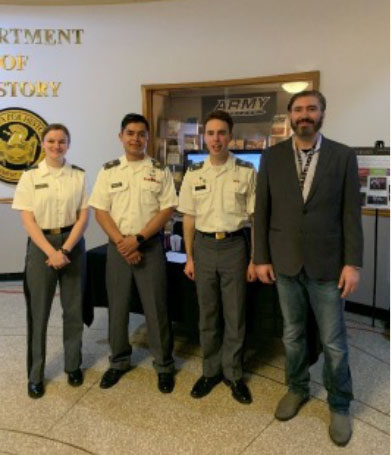
The team presented this innovative digital history project on 4 May 2023, on West Point’s 24th Annual Projects Day Research Symposium. A selection of the team’s members demonstrated how it has documented and catalogued thousands of human rights abuses committed during Guatemala’s Genocide and Civil War and used Geospatial Information Science software to create a series of digital, interactive maps and graphics which visualize the war’s violence. Their presentation drew dozens of interested cadets and faculty and was a testament to the project’s novelty and contemporary relevance. The full project will be a long-term one extending beyond Dr. Cangemi’s partnership with RCHGS. The Guatemala project will be one of the most creative and comprehensive assessments of the war’s violence and victims ever undertaken, and one that can be used by scholars of genocide, NGOs, prosecutors, and government agencies.
© 2026 · West Point Resnick Center for Holocaust and Genocide Studies