
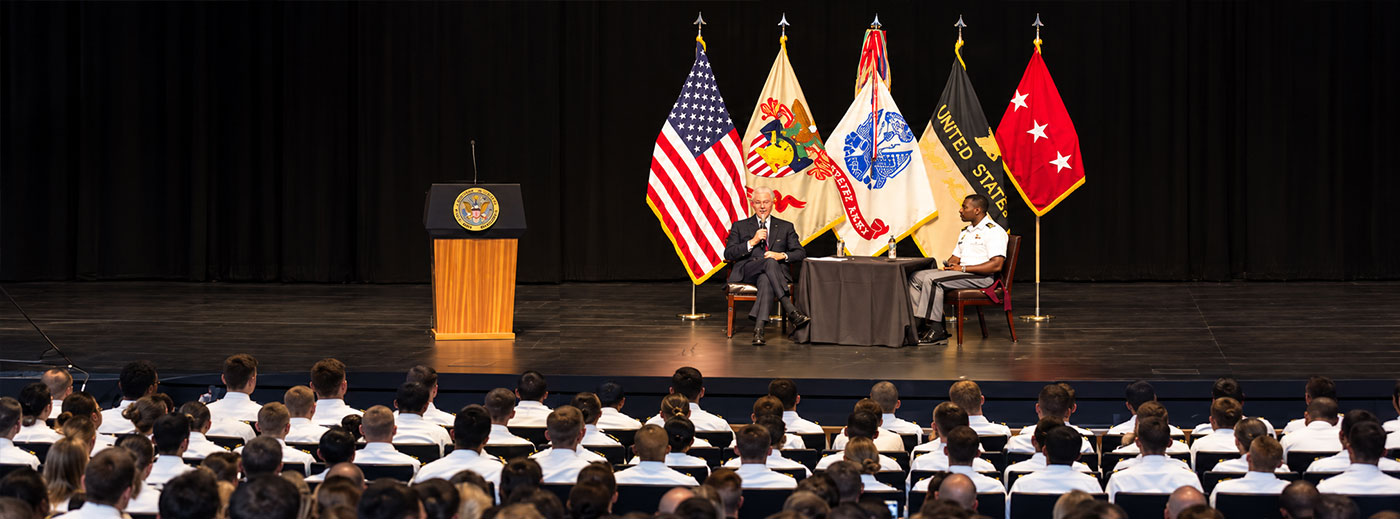
Engaging History Through Experience
The Resnick Center brings an interdisciplinary lens to understanding the full spectrum of human experience. It hosts guest speakers from a variety of fields who share firsthand perspectives on genocide and mass atrocity as well as sponsoring exhibits and workshops at West Point. Together, these efforts expose cadets to a wide range of ideas and illuminate the diverse ways people conceptualize, experience, remember, and commemorate mass atrocity.
Recent Events
2024
The Opening of the Roméo Dallaire Archive and 20th Commemoration of the Genocide in Rwanda
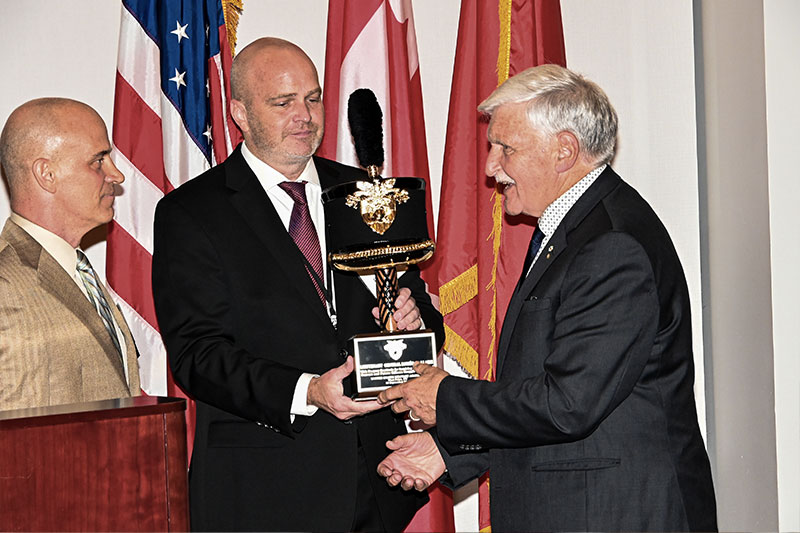
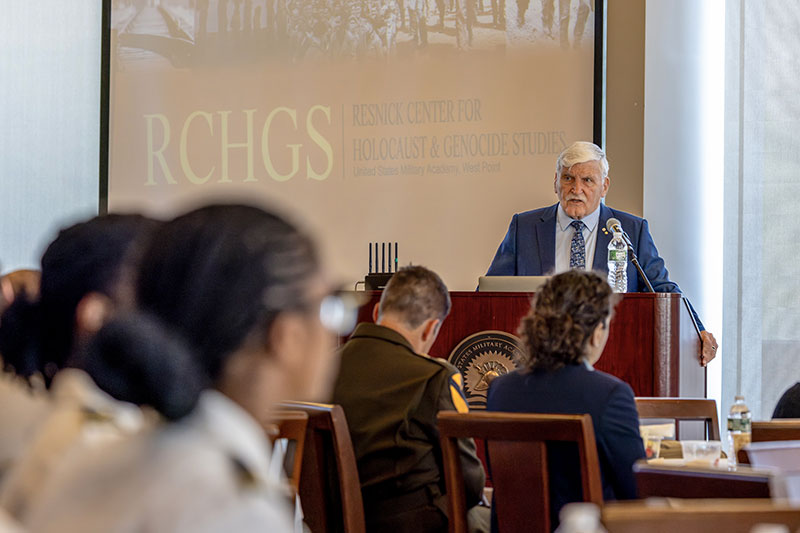
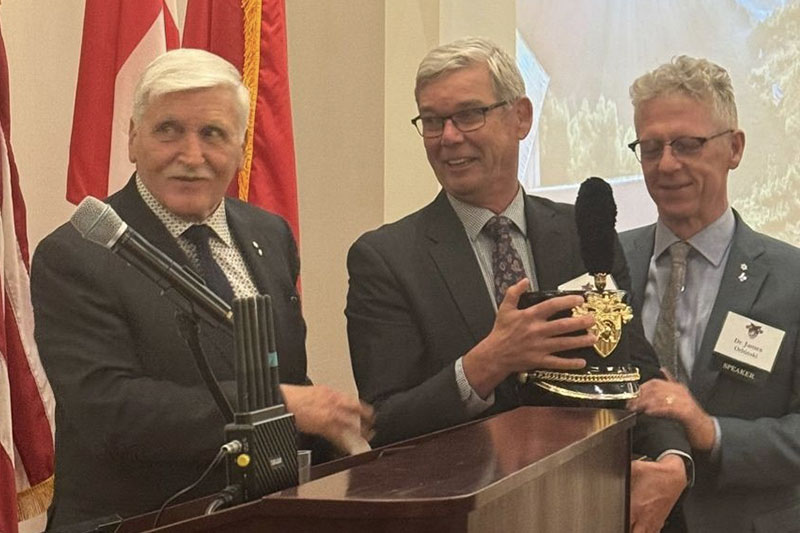
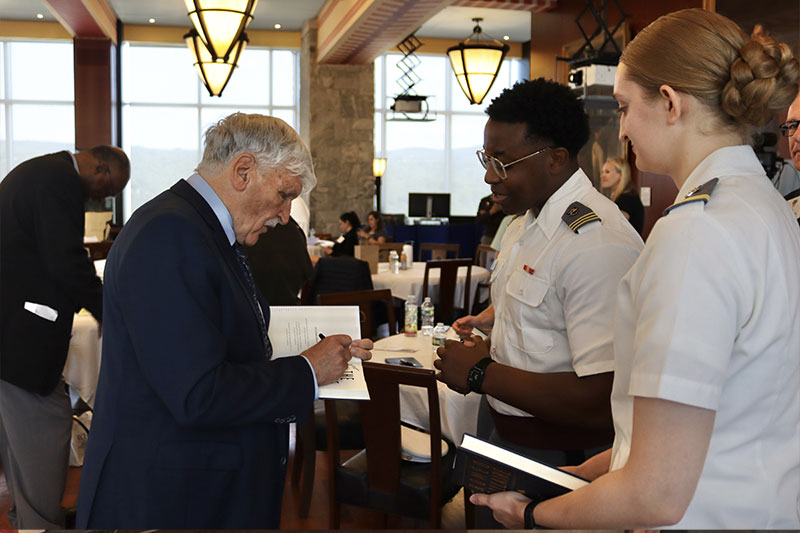
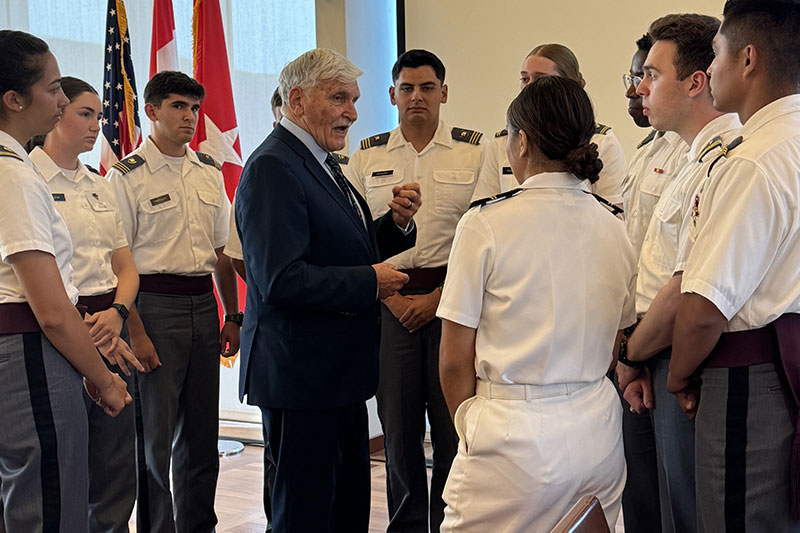
From 12-13 September 2024, the Resnick Center for Holocaust and Genocide Studies, the History Department and War Studies, and the Jefferson Library collaborated to celebrate the official opening of the Roméo Dallaire Archive, which celebrated the work, advocacy, and legacy of General Dallaire. The event featured an international conference with a variety of speakers including peacekeepers, survivors, journalists, diplomats, scholars, and experts who personally experienced or study the Genocide in Rwanda.
The event was open to cadets, faculty, and distinguished guests and permitted the Center and the Academy to powerfully commemorate the Rwandan Genocide, celebrate General Dallaire, and consider the ways his archive will help cadets better understand and learn to prevent mass atrocities.
The Roméo Dallaire Archive can be accessed here: Collection: Lieutenant-General Roméo A. Dallaire Papers | ArchivesSpace Public Interface
2024
Remember This
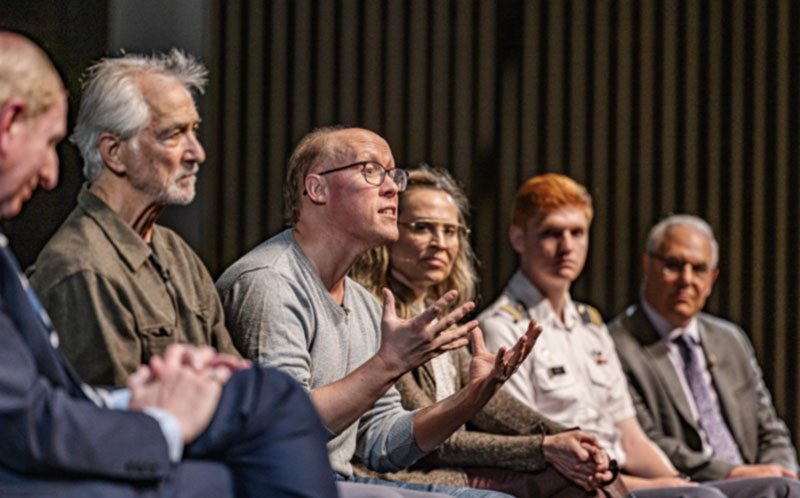
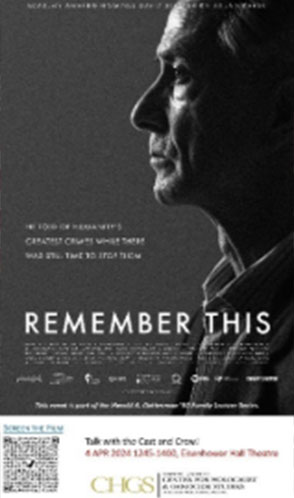
On 4 April 2024, CDT Andrew Keith’24 conducted a Question-and-Answer session with the members of the cast and production personnel responsible for the play and film Remember This. Panel members included Writer/Director Clark Young, Emmy-winning Producer Eva Anisko, Executive Producer Rick Salomon, and Academy Award-nominated actor David Strathairn. In the film, Strathairn portrays Jan Karski in a true story of a reluctant World War II hero and Holocaust witness. The film offers a true story of moral courage and individual responsibility, the story of an upstander. The play’s producer allowed any credentialed member of the West Point community to watch the film in advance of and after the event.
The event was a collaboration between the Resnick Center for Holocaust and Genocide Studies, the Diversity and Inclusion Studies Minor, Jefferson Library, Eisenhower Hall, and the Cadet Fine Arts Forum. Representatives of the Kosciusko Battalion also joined the event.
Days of Remembrance at West Point
2019
Dr. Christine Keren
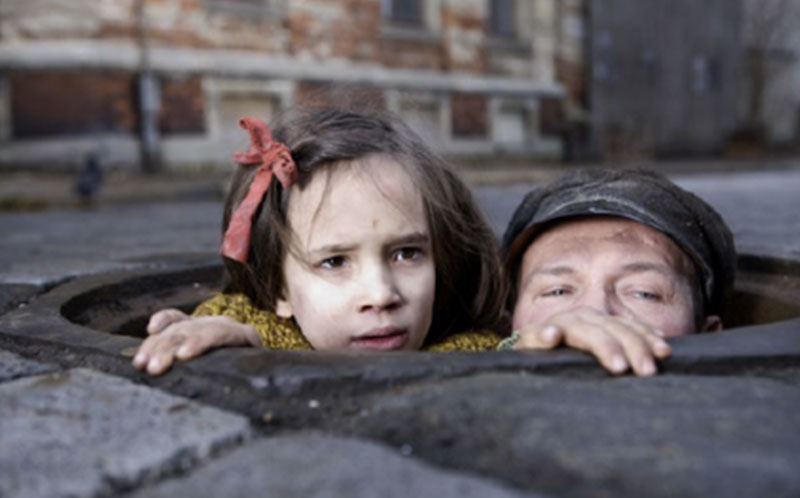
On 30 April 2019 the Center hosted Dr. Christine Keren (nee Krysztyna Chiger), a child Holocaust survivor, who lived with her family in the sewers of the city of Lvov (today Lviv). Her story, recounted in her book, The Girl in the Green Sweater, helped form the basis of the 2012 Agnieska Holland film In Darkness, which West Point received permission to screen. Between screenings of the film, Dr. Frey conducted a question and answer with Dr. Keren, who was accompanied by her husband Marian (also a Holocaust survivor), her sons Doron and Roger, and her friend Alexander Nadaner, who was a hidden child in Poland during the Holocaust.
The West Point Chapel Fund, the Orange County Jewish Federation, the USMA Library, & West Point’s Hillel all contributed to making this event possible.
2017
Dr. Debra Lipstadt
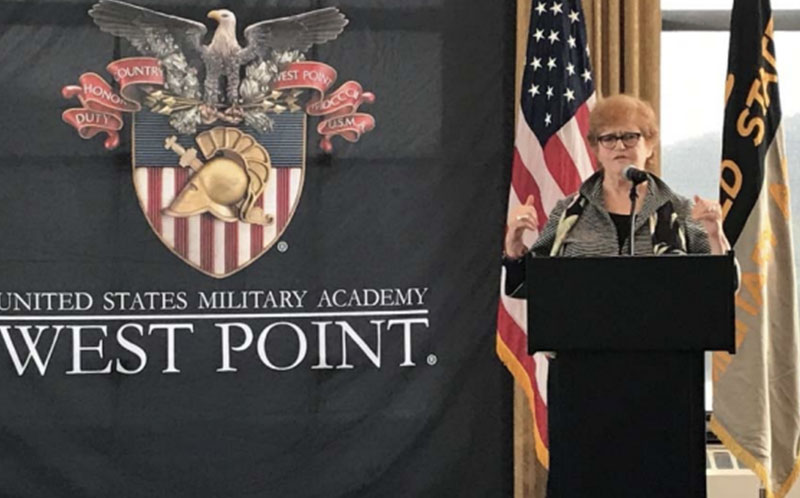
On 19 April 2017, Dr. Deborah Lipstadt gave West Point’s Day of Remembrance address. Dr. Lipstadt discussed the importance of historical truth and the Holocaust, particularly the difference between fact and opinion and the need for future officers to understand how to critically analyze both. Dr. Lipstadt’s talk was attended by nearly 400 cadets, faculty, senior leadership, and invited guests including multiple Holocaust survivors and liberators. Dr. Lipstadt also participated in a discussion of Denial, the 2016 film made about her trial against David Irving, whom she accused, and ultimately proved, was guilty of libel for denying the Holocaust. Dr. Peggy O’Donnel facilitated a post-film question and answer session with Dr. Lipstadt.
2016
Father Patrick Debois
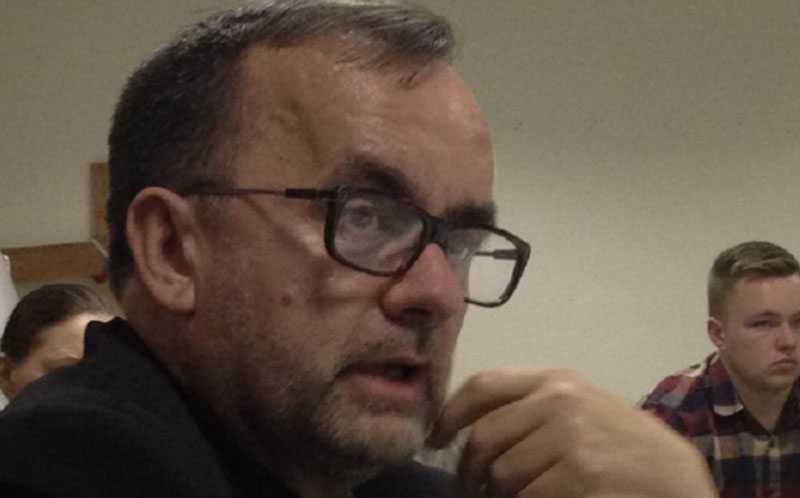
On 20 April 2016, West Point hosted Father Patrick Desbois as its Day of Remembrance speaker. Desbois is a world-renowned clergyman who has devoted his life to confronting anti-Semitism and furthering Catholic-Jewish understanding of the Holocaust. In his Day of Remembrance address, Debois spoke to an audience of over three hundred about the historic work he and Yahad-In Unum have undertaken. Yahad-In Unum has found thousands of previously undiscovered mass graves of many of the nearly 1.5 million Jews murdered by Nazi mobile killing units, known as Einsatzgruppen, in the bloodlands of Eastern Europe.
2015
President Bill Clinton Address to Corps of Cadets
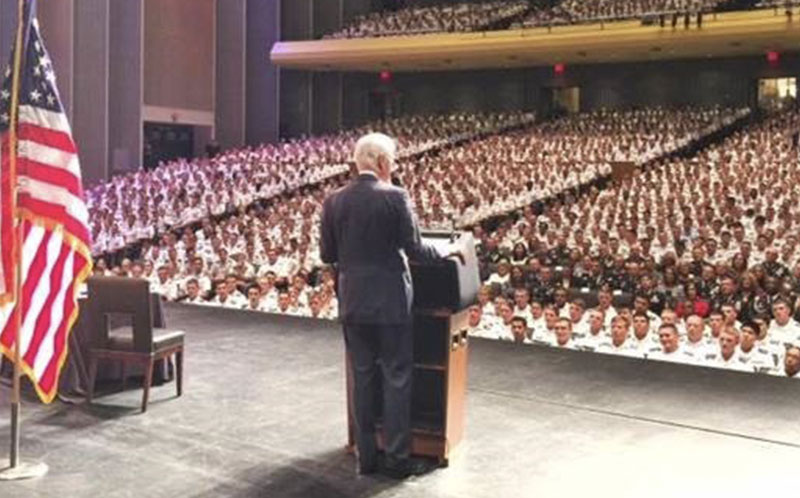
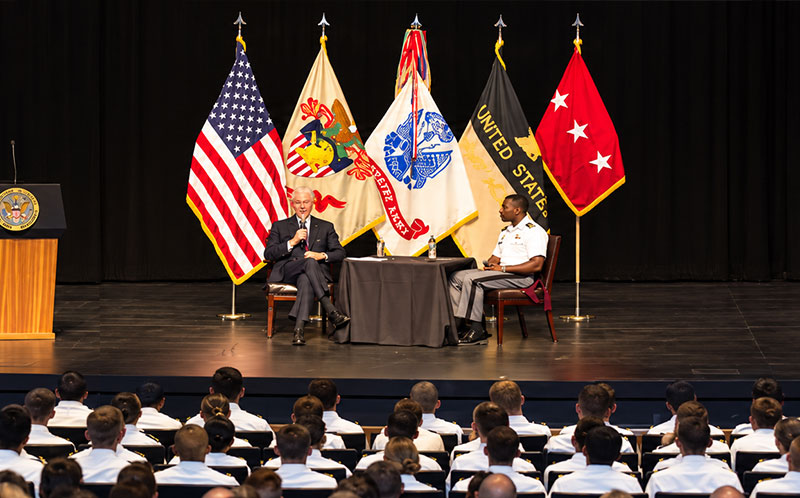
On 14 October 2015, the Academy hosted President William J. Clinton, the Center for Holocaust and Genocide Studies’ first presidential address. President Clinton addressed the entire Corps of Cadets and a select group of faculty and invited guests. In his speech, the former President also discussed West Point history and the need for leaders to understand the complexity of the world. After his speech, President Clinton took questions from cadets on a variety of topics ranging from atrocities in Somalia, Rwanda, and Bosnia to intervention in Kosovo to the continued importance of NATO and finally to the type of characteristics President Clinton most valued in the Army officers who worked for him.
Previous Events
2017
Opening of “Operation Finale: The Capture and Trial of Adolf Eichmann,” an Exhibit at the Museum of Jewish Heritage
The RCHGS and the Museum of Jewish Heritage collaborated on two events in the fall of 2017 to coincide with the opening of a new exhibit at the Museum of Jewish Heritage entitled “Operation Finale: The Capture and Trial of Adolf Eichmann.” In October 2017, the two organizations hosted a dinner and series of meetings between cadets and New York City leaders, which included a private tour of the Eichmann exhibit. In November 2017 experts from West Point held a talk entitled “Oaths, Obedience, and Orders,” which reflected on the legacy of the Eichmann trial.
2015
Discussion with Filmmaker Gabor Kalman
On 10 November 2015, RCHGS brought filmmaker Gabor Kalman to West Point to screen his award-winning documentary about a Hungarian teacher who led her students to rediscover the lost Jewish past and the Holocaust history of the city of Kalocsa, Hungary. After the screening, the director and producer, Kalman, discussed the making of the film and its significance to Holocaust studies and Hungarian history.
2014
GI Film Festival
In March 2014 the GI Film Festival screened several Holocaust-related films including Walking with the Enemy about rescue in 1944 Hungary and the documentary The Act of Killing about genocide in Indonesia.
2011
Mass Atrocity Workshop with Doris Bergen
On 17 October 2011, Dr. Doris Bergen facilitated a workshop to assist the Academy in the development of interdisciplinary approaches to Holocaust and genocide studies that can be incorporated across the core curriculum. Dr. Bergen was a critical participant in the first Mass Atrocity Education Workshop conducted by the West Point’s Center for Holocaust and Genocide Studies at the United States Holocaust Memorial Museum in May of 2011.